



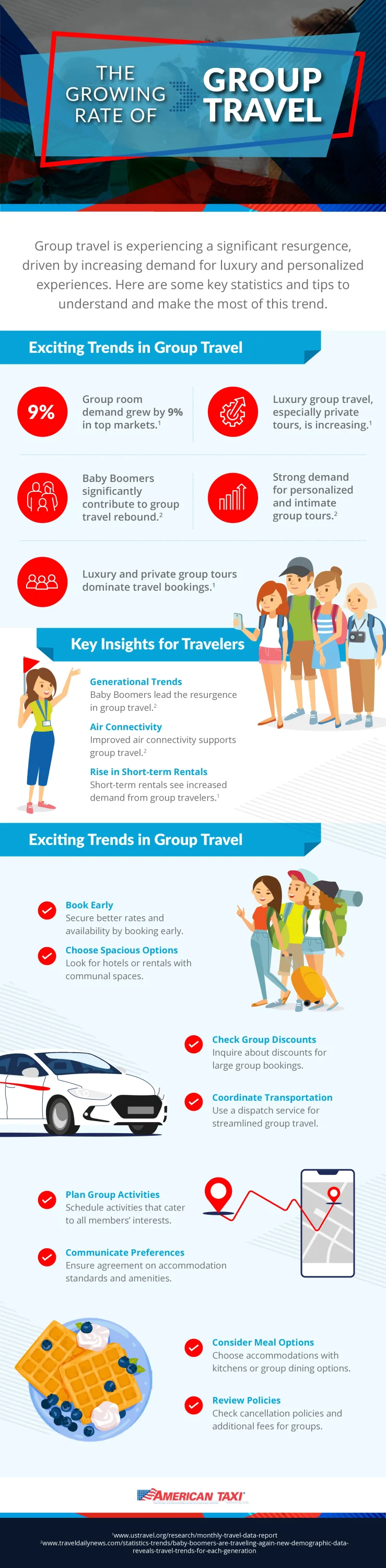
The travel industry is experiencing a significant rise in group travel, with more people opting to explore new destinations together. Whether for family reunions, corporate retreats, luxury tours, or friend getaways, this growing trend is reshaping the way people experience travel. Let’s examine the key factors fueling this surge and how the industry is adapting.
A major driver of this trend is the increasing demand for customized and high-end travel experiences. Today’s travelers are looking for more than just a getaway—they want personalized, memorable adventures. This is especially true in the luxury travel segment, where private tours, exclusive accommodations, and premium experiences are in high demand. Many travelers are willing to spend more to ensure their trips are unique and tailored to their preferences.
Generational shifts also play a crucial role in the rise of group travel. Baby Boomers, in particular, are eager to reconnect with family and friends while exploring new places. With both the time and disposable income to invest in travel, they seek comfortable, hassle-free, and enriching experiences. Their preference for curated group trips aligns well with the evolving travel offerings catering to this demographic.
The reopening of global travel markets has further accelerated this trend. As countries continue to lift restrictions and flight connectivity improves, travelers are making up for lost time by booking group trips that were previously postponed. Airlines and hotels are responding with better options for group travel, from expanded flight routes to accommodations designed for larger parties.
The industry itself is adapting to meet the growing demand. Resorts and hotels now offer more group-friendly amenities, such as larger suites, private villas, and communal spaces for gatherings. Many tour operators are designing itineraries specifically for groups, ensuring a seamless and enjoyable experience. Discounts and exclusive packages for larger parties have also made group travel more accessible and cost-effective.
Technology is another key factor driving the ease and popularity of group travel. Digital platforms and mobile apps now allow travelers to plan, book, and coordinate their trips effortlessly. From shared itineraries, group messaging and even the ability to book an O’Hare taxi, these tools simplify logistics, making group travel more convenient than ever before.
As we move further into 2025, the continued rise of group travel reflects a broader shift in consumer preferences. People are prioritizing meaningful experiences, social connections, and well-organized adventures over solo travel or standard vacation packages. With the industry adapting to accommodate this demand, group travel is set to remain one of the most dynamic segments in tourism.
Want to learn more about this growing trend? Check out the accompanying resource for additional insights.
Related posts
Recent Posts
- Top Family Resorts in Khao Lak for a Relaxing Family Getaway August 22, 2026
- Why Every Outdoor Traveler Needs a Portable Power Station for Camping August 7, 2026
- How to Choose a Luxury Stay That Suits Your Trip July 27, 2026
- What Makes a Savannah Elopement Package Worth Booking? July 17, 2026
- Buying In A Beach Area Where Lifestyle Comes First June 25, 2026
- How Multi-Location Access Helps People Keep Fitness Flexible June 23, 2026
- Why Villa Layout Matters For Group Holidays June 7, 2026
Categories
- Accommodation (6)
- Adventure (7)
- Camping (6)
- Cruise (1)
- Destination (8)
- Featured (2)
- Holiday (9)
- Hotel (4)
- Tour Guide (8)
- Travel (126)